
Showing posts with label LGBT Suicides. Show all posts

Tuesday, June 13, 2017

Conversion Therapy


I last wrote for Integrity USA nearly a decade ago when I was on the Board. We were coming out of a church-wide conversation about how we were going to treat LGBT people, and those of us in Integrity were both excited and curious - excited about the Church growing more fully into the love of Christ as and curious what the future of Integrity would be. Ten years later, as a priest at St. Paul’s Cathedral in San Diego (a Proud Parish Partner of Integrity), my experience is that we still question what direction Integrity is going. Here in San Diego, we often ask whether we still need Integrity, given the rapid change and acceptance of LGBTQ people in the life of the Church.

Recently, though, I have been reminded how shortsighted we are being when we ask if Integrity still has a role. Later this month, a Christian church in San Diego will host a national conference on conversion or reparative therapy. The “Restored Hope Network” will bring people from all over the country to offer "hope for those struggling with sexual and relational brokenness." They claim to offer a "cure" for homosexuality.

I must admit I was shocked when I learned that this conference was happening. For one, I thought reparative therapy died a few years ago with the dissolution of Exodus International, which closed in 2013 after its president apologized, acknowledged that conversion therapy does not work, and that changing sexual orientation is not possible. My understanding is that his ex-wife and a few other remnants of Exodus formed the “Restored Hope Network.”

I was even more surprised that such a conference would be held here in San Diego because in California and seven other states, so-called “conversion” therapy is illegal for minors, an acknowledgement of its dangers and lack of efficacy.

I have never been a victim of conversion therapy, but after seminary I spent several years working in a mental health inpatient hospital as a chaplain. I heard firsthand the awful stories of people who had their identities stripped away from them at the most tender moments of their lives. I met too many people who had attempted suicide because they had become deeply convinced by religious authorities that they were flawed and had no hope for a meaningful future.

When I was on the Board of Integrity, I toured churches as a representative of Integrity. Again, I heard stories of rejection and pain caused by conversion therapy. I listened to stories of struggle with self-acceptance and acceptance by God after religious abuse.

The damage caused by religious abuse, which includes conversion or reparative therapy, is real, is tragic, and pains the heart of God. Conversion therapy simply does not work and, in fact, causes damage. LGBTQ young people who experience rejection because of their identity are more than eight times as likely to attempt suicide as those who are accepted.

What is the future of Integrity? I do not know what it will be, given that the Church now has canons on the books to welcome and affirm our unique and God-given gifts - thanks be to God! Still, it is easy to become complacent once we have gotten for ourselves what we have sought, even when we know there are parts of the Church where those canons have yet to be fully realized.

Still, for me, Integrity has never been about only you and me.  It has always been about all of us; everybody; the whole human family. So I can tell you this: Integrity San Diego will be present to protest the Restored Hope Network national conference, and if you are in Southern California I hope you will join us. Because no child of God deserves to hear that they are anything less than fully loved by their Creator, that their gifts are a treasure to be cherished, and that they are themselves a part of this wondrous creation.

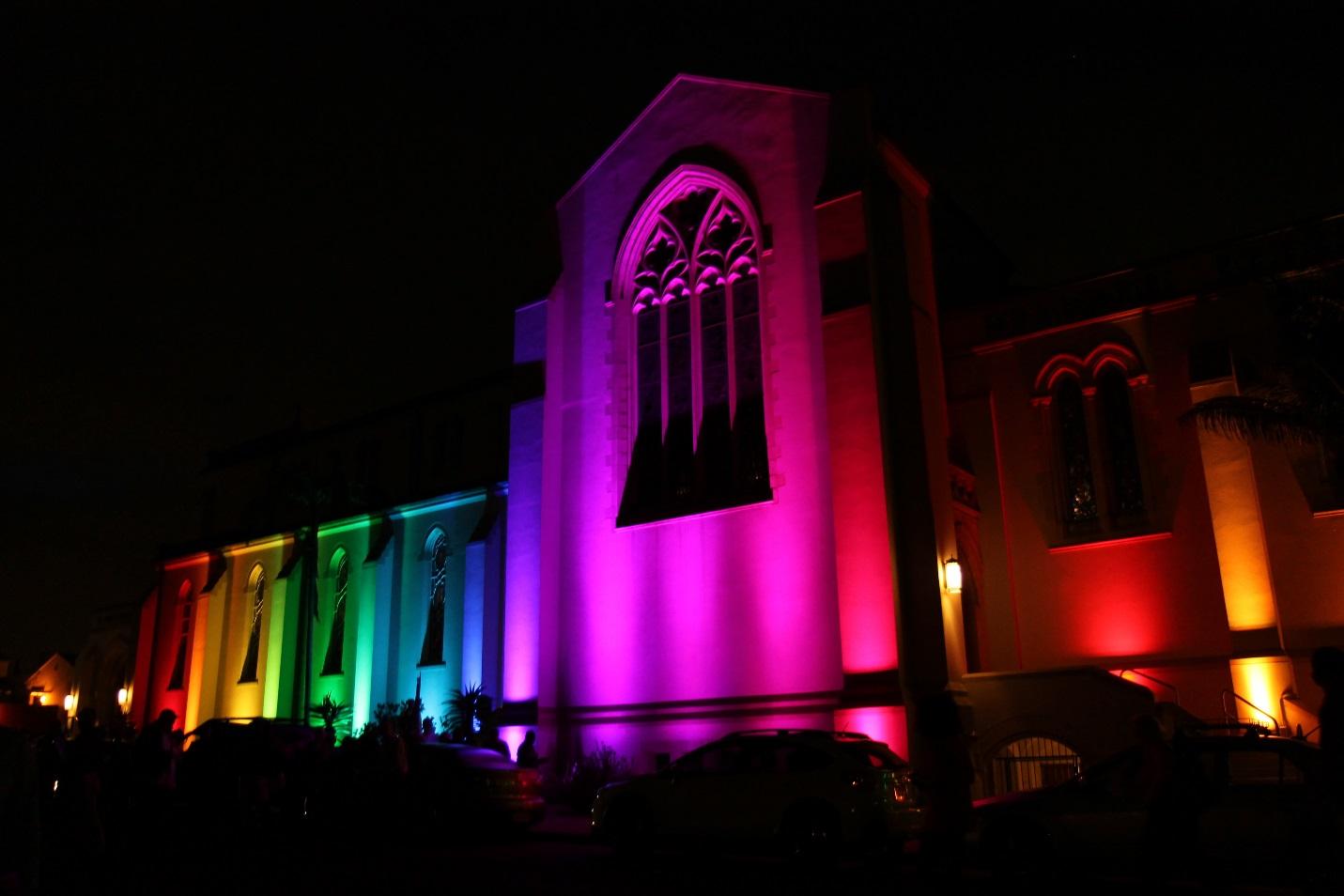
We will follow that up a month later with a fabulous pride celebration, where the Cathedral is an official stop for Pride week festivities when we will host an Interfaith prayer service featuring MCC founder Troy Perry. We will also take the lead on an interfaith “Pride with Prayer, Pride with Purpose” sub-theme in the official parade delegation. We will participate because Integrity, the Church, and all of us need to remind the whole world that LGBTQ gifts are meant to shine, and shine brightly!  We, all of us, are a part of this multi-colored rainbow body, straight and gay and genderqueer and trans. All of us, with our different functions and gifts and skills, are necessary to make this Body of Christ work together in harmony for love.

Wherever you are this pride season, I pray that you will live it fabulously in the unceasing love of God, and mindful of the justice that seems to be more and more needful every day.

The Rev. Jeff Martinhauk
St. Paul’s Cathedral San Diego


All are welcome to join us in this protest.  There will be a vigil on June 15 at 5:30pm, followed by demonstrations of love and acceptance organized by a group of San Diego LGBTQ organizations on June 16 and 17 at the sites of the hotel and conference. You are also invited to participate with St. Paul’s at San Diego Pride on July 15.

Friday, October 9, 2015

Join us on Spirit Day this October 15

Join us on Spirit day this October 15th. Integrity's forty year support of LGBT Episcopalians includes our youth, and we wholeheartedly encourage efforts to make the public aware of the suffering of those whose lives are made miserable, or worse ended, as a result of bullying.

According to GLAAD, "Spirit Day began in 2010 as a way to show support for LGBT youth and take a stand against bullying. Following a string of high-profile suicide deaths of gay teens in 2010, GLAAD worked to involve millions of teachers, workplaces, celebrities, media outlets and students in going purple on social media or wearing purple, a color that symbolizes spirit on the rainbow flag. Spirit Day now occurs every year on the third Thursday in October, during National Bullying Prevention Month, and has become the most visible day of support for LGBT youth."

We invite you to wear purple on October 15th, and be willing to tell people why. Show your support for our children, and let them know that you support them. Feel free to tweet and Facebook your purple with the #SpiritDay hashtag. Turn your Twitter and Facebook profile photo purple using this link.

For our Bishops and Priests, we ask that you wear purple on October 18th, and designate it Spirit Sunday. Use purple as your liturgical color that day, and make it clear that we, as Christians, need to support our LGBT youth - some of the most vulnerable in our society.

Pledge to go purple!

Sunday, November 21, 2010

Light Shining in the Darkness: Transgender Day of Remembrance in Boston


Early yesterday evening, as the nearly full moon rose above the Boston Common, my partner, our thirteen-month-old and I headed to dinner with a friend and then wandered around the corner for Transgender Day of Remembrance (TDOR). Upon arriving at the Cathedral Church of St. Paul, I was amazed at how many people were already there, even a half hour before the start of the event. Before the night was over, between 325-350 people would crowd into the space, including the balcony (and I got those numbers from the ultimate source, Jim Woodworth, one of the cathedral’s longtime sextons).

One of my favorite things about TDOR is the way it draws people together—I love touching base with people I haven’t seen in a while, and this year I was struck by the variety of contexts from which I knew people: from the Greater Boston trans community, current and former students, and Episcopalians from the Diocese of Massachusetts. In the latter category was the Reverend Stephanie Spellers, priest and lead organizer of the Crossing, and Penny Larson, drummer for the music team of the Crossing, which for the second year in a row hosted an open mic on Thursday for the local collaborative “Transcriptions.” Penny gave some very moving remarks later in the event, which are reposted below.

Also present at TDOR for the first time this year was my bishop, the Right Reverend M. Thomas Shaw III. He had just come from a eucharist celebrating the 100th anniversary of the clothing of the sisters of St. Anne-Bethany, and was present to deliver a welcome message.

When the MC for the evening, Mesma Belsare, called Bishop Shaw forward, I have to say my heart was absolutely pounding, and I found myself wondering why. I think it was because of the intense way my worlds were intersecting in that moment. And while TDOR was hosted by my congregation over the last two years, and I myself spoke in the slot that +Tom was now occupying, last night’s intersecting worlds felt more intense to me. This was probably because the event was unfolding in this same space in which I was ordained in 2004 and 2005-- actually, as I write this, I’m realizing that last night I was sitting just about where I sat and then stood during my ordination to the diaconate, which +Tom did. But mainly I think I was nervous because I know that members of the trans community have been hurt very badly by people of faith, and especially by churches—in the name of my God. And I was, I admit, concerned that Bishop Tom not say anything to exacerbate that hurt.

He started out by saying that before he welcomed everyone, he wanted to offer an apology. He wanted to apologize for the way in which Christians in particular have hurt transpeople, how Christians have, as he put it, “misrepresented God” to transpeople. Then he went on to reference the work of trans people in this diocese, at which point he referenced me and my colleague Chris, both of us transmen and priests here. I was very moved and humbled by what he had to say about us. He went on to say that both the church(es) and the world are made more whole by the full participation of transpeople in their midst and in their lives. He closed by saying it was therefore a particular honor for the Cathedral to host TDOR.

The applause for +Tom was sustained and, I sensed, at least from those sitting around me, that people were quite moved and perhaps even a little surprised by their positive response to +Tom’s remarks. Of course I can’t know how anyone other than myself, and those who later commented to me, felt—but that was the sense I got.

A number of speakers got up and spoke from their hearts throughout the event, ranging from transpeople to non-trans allies. There were people who spoke of having avoided coming to TDOR in the past because it was too scary, or felt too potentially victim-oriented to them, but who now felt differently. Particularly moving to me were the remarks of young people—one non-trans twelve-year-old spoke of one of her parents, a transwoman, and how lucky she felt to have her as a parent. Two young transmen spoke about the importance of reaching out to trans youth, and to watch especially closely for warning signs of suicidality. Two parents of a young man who died here in MA a few years ago spoke very movingly about their commitment to and love of the community. Several people spoke of people they knew who had taken their own lives, or attempted suicide, and several people came out as suicide survivors. In the wake of the intense reflection in this country about LGBT suicides this fall, this sequence of speakers gave a very important reminder that the T is very much part—indeed, likely even more at risk – of this wider pattern. But risk and loss were counterbalanced by resilience: people spoke of how they have reclaimed their lives, and of how important it is to protect and nurture one another’s unique humanity. One person spoke of this need with beautiful metaphors of light.


That image resonated yet more at the conclusion of the event, when the huge group split into two for the candlelight vigil. One group went across the Boston Common to the State House to read the names of the dead and then walked to the gazebo at another spot on the Common for a final gathering, while the other group went directly to the gazabo. As the groups left, my partner and I decided we needed to take our wiggly little guy home, so after chatting with other stragglers for a few minutes, we gathered our things together and made our way to the back of the cathedral. As we exited the swinging glass doors and stood with Jim out on the cathedral steps, we watched a long train of candlelight slowly make its way across the common, majestically moving from the State House to the gazebo.

The light shone in the darkness and the darkness did not overcome it.

Rev. Dr. Cameron Partridge


*********************************

Penny Larson’s remarks, which are also posted at her blog are below:

Good evening. Thank you for coming, and welcome to my home.

I showed up on these steps four years ago, less than six months after my transition, and I was welcomed as an equal sister. I drum here, and I worship here. The Crossing community has prayed for me and laid hands on me during my process. They have marched with me and lobbied with me. This past Easter Bishop Shaw received me into the Episcopal Church as I delivered the sermon during the Cathedral’s Easter Vigil. I feel blessed and humbled to be a part of The Crossing community, and I am profoundly moved that my family is helping to host this Transgender Day of Remembrance.

As you know, this is a somber time, when we remember those that have been lost in the last year to violence. Sometimes the price is high when one lives an authentic life. There is fear, and misunderstanding, and hatred. Whatever the number of people we recognize this evening as lost during this last year, I suspect that the true number is higher. We simply are the victims of violence far more often than could be explained by mere random chance. We are targeted.

I have a dear friend who wonders why we do this every year, I believe she says something to the effect that we are celebrating our victim hood. And I admit that the heaviness of this day weighs upon me, even though this is only my fifth Transgender Day of Remembrance. It might be easier to just let this day slide by with barely a notice, to pretend that a day to remember our dead was unnecessary. But then the easy thing isn’t always the right thing. So while I’m very happy to have been involved with a special open mic night co-hosted by The Crossing and Transcriptions as part of Trans Awareness week, which was far more positive and celebratory, I think the importance of this night can not be overstated.

This past August, I volunteered at the inaugural season of Camp Aranu’tiq, a camp specifically for trans and gender-variant kids between the ages of 8-15. I got pretty attached to those kids, and I’m sure I’ll be back next year. Those kids were amazing, and it was a joy to be around them. This is our next generation. Many of them were experiencing the thrill of being themselves for the very first time at camp. Those kids just want to live happy lives being the people they truly are.

But the reality is stark. And the world that exists presents all sorts of difficulties for those who are perceived as different from some arbitrary standard. I want the world that those kids grow into to be so much closer to perfect than the world I grew up in, and yes, even the world as it stands now. I want those kids to grow into a world where they won’t have to go to a camp to be met with unconditional understanding and acceptance. My mother, when I was very little, taught me to always know that I am no better than anyone else, and I am no worse. I believe that we can all live together, celebrating each others similarities while basking in our uniqueness.

And so it is on this night, more than any other, that it becomes of paramount importance that we stand to fear and hatred, whether from within or without, and refuse to be anything less than our full selves. It is on this night that we should embrace the rich diversity that exists within our world of community, allies, supporters, friends, family, and loved-ones. It is on this night that we must change the world.

Thank you for joining us!

Wednesday, October 20, 2010

Stigma and the LGBT Suicides -- a View from Harvard

A week ago today I made my way from the Episcopal Chaplaincy building on Garden Street, through the chill evening to Harvard’s Memorial Church. As I rounded the corner by University Hall, the light of over two hundred candles flickered ahead of me on the steps that face Widener Library, the same steps from which the liturgics of commencement are enacted every spring. This was a vigil to mark, cry out against and be galvanized by the recent rash of LGBT suicides across the United States over the last several weeks. This series of events, and the unprecedented public conversation that has circled about them, has been devastating to many in the Harvard community, particularly LGBT and allied students.

I came to this vigil to represent the Episcopal Chaplaincy (as indeed Episcopal Chaplains across the country have been responding to this rash of violence), which was one of several co-sponsors of the event, and to reach out to LGBT students across the University at this difficult time, letting them know that they are not alone. Voices of people of faith too often stoke the broader cultural dynamics of violence at the root of all of this, and it felt important to be visible as an Episcopal priest standing against that violence. I was also present as a Lecturer currently teaching—and having previously taught—a number of LGBT students deeply impacted by the rash of suicides. Though I’m not sure how many other chaplains were present (there was at least one other), I know I was far from the only professor or staff member there, and that sense of institutional solidarity and support moved me.

But it was also personally important to me to be there as someone who has experienced that broader culture of violence as a member of the LGBT community. Following the example of previous speakers, I spoke in the brief open mic period at the end of the vigil of coming out. In my case, I explained, I happen to have come out twice—first, my sophomore year of college as gay, and then in graduate school as a transgender man (I transitioned from female to male in 2002). I spoke of the importance of community, real community based on authentic relationships, and how important it is right now to reach out to one another across the borders—particularly of faith traditions — that too often separate us.

Two days before the vigil, the combination of the Sunday lectionary readings and the rash of suicides already had me thinking about what it was like to be a young person struggling with the intersection of faith and social stigma. The theme of leprosy in the readings inspired me to open my sermon with a story of how, when I was in fifth grade, I stumbled upon a library book, Damien, the Leper Priest about Damien de Veuster, a Roman Catholic priest (recently included in the new collection Holy Women and Holy Men) who had served a community living with what is now called Hansen’s Disease. Damien went to this shunned community, fought bureaucrats to get them basic living supplies, built them a physical infrastructure (water supply, housing, etc), bound up their wounds, worked to de-stigmatize the disease, and ultimately contracted it himself, dying as a “leper among lepers.” This was the one book report I did that year that really meant something to me. There was something about the shape of Damien’s ministry in relation to the dynamics of social stigma that rocked my ten-year-old world. It didn’t hurt that as a gender nonconforming kid, stigma was very familiar to me.

The intersection of stigma and faith emerged in another recent Harvard event, a Divinity School panel entitled “Queer Youth and Religious Debates Over Sexuality." When I arrived, I was struck first of all by the Harvard police who stood guard at the doors to the room where the panel was held. Even in its absence, this visible reminder of potential disruption felt overbearing; I could feel it actually raising my heart rate as I listened. While all the remarks were moving, I was struck particularly by those of Professor Mark Jordan who spoke of how “the fights about [LGBT youth] often try to claim them for one camp or another — either religious or queer, but rarely both.” This is one of the peculiar challenges for those of us who are indeed, and have long been, both.

And so as this moment of grief and anger— here at Harvard and far beyond—begins to fade from media coverage, we must refuse to forget this episode. I don’t want any of us, whatever our age, sexual orientation, or gender identity, to lose sight of the violence—psychic and physical-- that underlies and emerges from the workings of stigma in all its forms. I'm particularly cheered to read the several statements that communities and individuals across the Episcopal Church have made (see Episcopal Cafe for a collection of them)-- reading them makes me grateful for the support I received as a young person, and galvanized to continue extending that support here and now.

Rev. Dr. Cameron Partridge
Interim Episcopal Chaplain, Harvard University