Showing posts with label Uganda. Show all posts

Friday, June 20, 2014

On World Refugee Day, Integrity Remembers LGBT Asylum Seekers

Friday, June 20th, is World Refugee Day, when the plight of displaced persons around the world is upheld for advocacy and prayer.  The Presiding Bishop of the Episcopal Church, the Most Rev. Katharine Jefferts-Schori, issued a statement which says, in part:
"Remember in prayer all who flee persecution and suffering in search of security and peace, remember the baptismal promise to strive for justice and peace, and reaffirm our commitment to welcoming the stranger as Christ himself."
Throughout 2014, Integrity has shared messages from the LGBT Faith Asylum Network, an organization led by our former Executive Director, Max Niedzwiecki.  Max also addressed the April meeting of the Integrity Stakeholders' Council.

LGBT-FAN helps connect LGBT asylum seekers with individuals and groups who are willing to help with housing, job placement, the asylum/immigration process, and spiritual care.  Where possible, they help to foster a community for these displaced people by guiding them to places where others share their cultural/ethnic experience.  In addition, LGBT-FAN seeks to educate faith communities about the struggles LGBT asylum seekers face, in the hope of building much-needed additional support and outreach.

The situation for LGBT people in many countries throughout the world is dire.
  • There are laws against homosexuality in over 80 countries around the world.
  • In over 70 countries, you could be imprisoned if you are part of the LGBT community.
  • In 7 of those countries, the punishment is the death penalty
  • In some of those countries "corrective rape" is common and sometimes committed by government officials.
In the past year, Nigeria, Uganda, India and Russia all created new anti-homosexuality laws.  Violence has increased against LGBT people, often with the tacit approval of government officials and church leaders.  The Anglican archbishops of Uganda and Nigeria, along with their backers in the West, have voiced their approval for the new legislation in those countries.

Once here, asylum seekers are not eligible for government social services nor permitted to seek employment for at least six months, while they are trying to sort through the immigration/asylum process, often without the funds to pay for legal help.

On this World Refugee Day, we ask that you learn more about the work of LGBT-FAN and consider whether you are being called to assist their work in some way.  We ask that you speak about the plight of LGBT asylum seekers within your faith communities; there is a good deal of information available on the organization's web site for sharing.  You can read first-person accounts from some of the people they have been able to help, learn about the innovative ways different groups are providing assistance, and consider whether a program might be possible in your area.

Some LGBT groups have elected to dedicate part of their presence at Pride events toward building awareness of the LGBT refugee community.  Reflecting the need for anonymity or their "facelessness" situation, asylum seekers or those representing them wear masks or even bags over their heads, carried placards, etc.

Please hold LGBT asylum seekers and those working to assist them in your prayers as they attempt to find a safe home where they can live authentically without fear.

Christian Paolino is the chair of Integrity's Stakeholders' Council

Sunday, March 2, 2014

Bishop Singh Speaks Out on LGBT Rights


On Wednesday, Feb. 26th, the Right Rev. Prince Singh, Bishop of Rochester, sent the following letter to the Anglican churches in Uganda and North and South India:

Dear brothers and sisters in the Anglican Church of Uganda and the Churches in North and South India,

My name is Prince Singh and I serve as bishop of the Episcopal Diocese of Rochester, New York, a member of the larger Anglican Communion. I write you because the recent passing of anti-homosexuality legislation in Uganda weighs heavily on my heart. India, my country of birth, recently passed a similar bill criminalizing gay and lesbian people, deeming their lifestyle as a punishable crime. I write you because it is my moral obligation to express my deepest rue – that these children of God are being persecuted within my Anglican family. I implore you to stand with these children of God, now made even more vulnerable by this unjust bill that flies at the face of our common baptismal dignity.

Our hearts break for the people of Uganda. Why? In the United States, we have treated our gay and lesbian brothers and sisters in a similar manner in the past. At one stage to be gay was criminal here and we treated gay people with great prejudice, hatred and fear. These attitudes are still present in our own country, but more and more enlightened people are able to see that God made gay and lesbian people - just as God made me brown. We are learning of the damage we have inflicted on human beings by hateful attitudes. But just as damaging as the sin of persecution is that horrible sin of silence. We have heard story after story of the pain and deep wounding that we have caused gay and lesbian people simply by saying nothing. Worse still, we have abused Scripture to fuel hate!

We cannot go on hurting those we are called to love and protect. These are our children, our mothers, our fathers, our brothers and sisters.

We don’t have all the answers, but we want to build a world where all people are safe, protected and loved equitably. What country does not want this for its people? What kind of Church wants to be complicit in creating a community of people who are scapegoats, ready sacrifices to hatred and bigotry?

We plead with you, as fellow Christians, as people who are called to reveal the love and grace of God to please pay attention and speak up.
  • Please protect those who are gay or work for gay rights.
  • Please provide a genuine safe space to hear the real life and stories of the gay community. They are not what you have been led to believe.
  • Please find ways as the Church to protect and advocate for those who are more vulnerable and marginal members of society. This includes not only gay, lesbian, bisexual and transgender people, but also women, the poor, the unemployed, the outcaste and the hopeless.
We will be praying for you as you engage these issues of responsible discipleship. Please uphold us in your prayers as we strive to do the same in our context. Please tell us how we can be mutually helpful in this process since we are all interconnected in the web of life.

Your fellow servant in Christ,
The Rt. Rev. Prince G. Singh
Bishop, Episcopal Diocese of Rochester, NY

Monday, February 24, 2014

PRESS RELEASE: Integrity Condemns New Anti-LGBT Law in Uganda


Integrity is shocked and saddened by the news that President Yoweri Museveni of Uganda has signed into law the draconian anti-homosexuality law that introduces long prison sentences for gays and lesbians and makes it a crime to fail to report someone you believe to be gay. This will increase anti-gay hatred and set in place a renewed witch-hunt in which many people will be hurt.


We call upon the Church of Uganda to take seriously its commitment to Lambeth 1998 Resolution 1.10 in which Anglican Communion bishops committed themselves "to listen to the experience of homosexual persons and… to assure them that they are loved by God and that all baptized, believing and faithful persons, regardless of sexual orientation, are full members of the Body of Christ." Such a commitment in a time like this will surely include providing places of sanctuary for those whose lives are threatened.

Our hearts go out to our LGBTQ sisters and brothers who this morning are living in fear of betrayal by friends, family and neighbors and of long-term imprisonment.

It is unfortunate that Uganda should choose this way, according to a government spokesperson, "to demonstrate Uganda’s independence in the face of Western pressure and provocation." Uganda’s symbolic independence is being won on the backs of one class of citizens and this will provoke fear and confusion among the very people Museveni is elected to serve.

Integrity hopes that President Obama will follow up on his comment that this could complicate US relations with Uganda and will seriously consider the reduction of US aid until Uganda can show a better record of human rights.


Friday, January 31, 2014

Presiding Bishop Issues Statement on Criminalization of Homosexuality

The leadership of Integrity read with gratitude the statement issued January 30th by the Most. Rev. Katharine Jefferts Schori, Presiding Bishop of the Episcopal Church, regarding the recent efforts to criminalize homosexuality by several countries in recent months.
The statement reads:
"The Episcopal Church has been clear about our expectation that every member of the LGBT community is entitled to the same respect and dignity as any other member of the human family. Our advocacy for oppressed minorities has been vocal and sustained.

The current attempts to criminalize LBGT persons and their supporters are the latest in a series, each stage of which has been condemned by this Church, as well as many other religious communities and nations. Our advocacy work continues to build support for the full human rights and dignity of all persons, irrespective of gender, race, national origin, creed, sexual orientation, physical and mental ability or inability. To do less is effectively to repudiate our membership in the human community.

No one of God’s children is worth less or more than another; none is to be discriminated against because of the way in which she or he has been created. Our common task is to build a society of justice for all, without which there will never be peace on earth. Episcopalians claim that our part in God’s mission is to love God fully, and to love our neighbors as ourselves. That means all our neighbors."
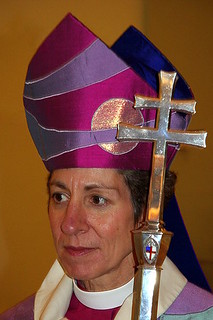
English The Most Reverend Dr Katharine Jefferts Schori 26th Presiding Bishop of the Episcopal Church
The Most Rev.
Katharine Jefferts Schori

Photo Credit:
Flickr user kirkamunga

Used under Creative Commons


"I am deeply grateful to the Presiding Bishop for adding her voice to the others around the church who are beginning to speak out against the inhumanities being endured by LGBT people around the world," said the Rev. Jon M. Richardson, Integrity's Vice President for National Affairs, who -- as our liaison to the Chicago Consultation -- traveled to Africa several times to meet and pray with LGBT Anglicans there. "It is especially heartening that she has set her words in the context of the larger vision that has been emerging in the Episcopal Church over the past few decades - we are not a church that will tolerate oppression against anyone. God has given us a higher calling: to respect the dignity of every human being."

Reports of violence against LGBT people in Russia, Uganda and Nigeria have been publicized since their governments enacted or considered laws intended to punish either those who are LGBT, provide assistance or support to LGBT people, distribute pro-LGBT "propaganda"  participate in a same-gender wedding, or even express same-gender affection.

Integrity president, the Rev. Dr. Caroline Hall commented that "these new laws and the consequent violence are in part due to a sustained campaign by Americans acting in the name of Christ. I am grateful that the Presiding Bishop has made it clear that The Episcopal Church has no truck with such homophobic activities."
The Presiding Bishop's statement follows commentary from the Rev. Gay Clark Jennings, President of the House of Deputies, published widely earlier the same week. She acknowledged the western church's role in creating the intolerant climate many African LGBT people now face.

A petition by Davis Mac-Iyalla of the UK-based Changing Attitude calls for the Archbishop of Canterbury, the Most Rev. Justin Welby, to speak to his Ugandan and Nigerian peers about their enthusiastic endorsement of the laws.  Archbishop Welby and the Archbishop of York, the Most Rev. John Sentamu, published a joint letter to the primates reminding of the commitment made in the Dromantine Communiqué of 2005 to "the pastoral support and care of homosexual people" but referring only vaguely to the situations currently unfolding.

Integrity urges all our members and partners to speak to your congregations and loved ones about the persecution of LGBT persons abroad and the plight of those who seek asylum in the United States.  Please contact us if you would like more information.

Christian Paolino is the Chair of the Stakeholders' Council of IntegrityUSA

Wednesday, January 29, 2014

House of Deputies President Speaks Out on Nigeria & Uganda


On Monday, January 27th, the Rev. Gay Clark Jennings, President of the House of Deputies of the Episcopal Church, issued a strong statement in Religion News about the deteriorating plight of LGBT people in Uganda and Nigeria, where the countries' parliaments approved new laws that essentially make it illegal to be gay.

The Rev. Gay Clark Jennings at a bible study during the
first Chicago Consultation event in Durban, South Africa,
in October of 2011

Photo Credit: The Rev. Jon M. Richardson
As Paul Lane reported last week, a weakened version of Uganda's "Kill the Gays Bill" voted into law in December was tabled by President Yoweri Museveni on a technicality, but it is not likely to be forgotten.

In Nigeria, President Goodluck Jonathan approved a new law which is nominally intended to prevent same-gender marriage (with a 14-year prison term) but which in fact essentially states that it is a crime to either express same-sex attraction or support anyone who does.  Reports that gay men are being rounded up have been condemned by the United Nations and others.  In the Muslim-controlled north where sharia law is applied, those arrested are at risk of death by stoning.

The new laws have been lauded by the Anglican leadership in both countries. In her commentary, Jennings acknowledged the role the church has played in the situation:
"I am troubled and saddened that fellow Anglicans could support legislation that fails to recognize that every human being is created in the image of God. Western Christians cannot ignore the homophobia of these church officials or the peril in which they place Ugandan and Nigerian LGBT people. The legacy of colonial-era Christian missionaries and infusions of cash from modern-day American conservatives have helped to create it."
 Jennings, who is also a founding member of the Chicago Consultation, has spent time in Africa meeting with those who seek a more compassionate stance towards LGBT people, but find the literal understanding of the Bible encouraged by Western missionaries difficult to overcome:
"These brave leaders have taught me that there is no getting around the Bible when searching for the origins of the homophobia that is rampant in many African cultures. What’s more, Europeans and North Americans bear much of the historical responsibility for this sad state of affairs. As Zimbabwean biblical scholar Masiiwa Ragies Gunda has written, it is 'far-fetched to look beyond the activities of Western missionaries' when considering the role of the Bible in Africa."
The anti-LGBT fervor within African churches has been encouraged by American evangelical ministers like Scott Lively.  Lively is currently the target of a lawsuit for crimes against humanity in the U.S.  by Ugandan LGBT leaders for his role in the increasingly anti-LGBT culture there, under the Alien Tort Statute, a 1789 law which has been expanded in recent years to include human rights abuses. Undeterred, Lively told a radio host in October that he considers the new anti-gay laws in Russia, where he has also spent time, "one of my proudest achievements."

Jennings sees all of this as a call to action for the church:
"Western Christians cannot fix the homophobia that is currently gripping Nigeria, Uganda, or other African countries. We can, however, stand in solidarity with progressive Africans and support their efforts to teach new ways of interpreting the Bible and understanding sexuality. When we see human rights abuses, we can speak out. And most of all, we can acknowledge with humility that we bear our share of the responsibility for this tragic legacy of empire and insist on repudiating contemporary efforts to expand its reach."
Integrity's Vice-President for National Affairs, the Rev. Jon M. Richardson, is a fellow Chicago Consultation steering committee member who also took part in the Africa meetings:
"Reading this op-ed from the President of the House of Deputies makes me proud, once again, to be an Episcopalian. By virtue of our baptism we have a responsibility to 'seek and serve Christ in all persons, loving our neighbors as ourselves.'

One of the gifts of the Anglican Communion is that it helps us all to see just how wide a net that covenant casts - our neighbors are not just the people closest to us, but our brothers and sisters all over the world in their times of celebration and in their times of suffering.

I had the honor of participating in the consultations on Bible and sexuality that the Rev. Jennings mentioned, and I have heard first hand of the suffering - and the celebrations and hopes - of our LGBT sisters and brothers from around Africa. We cannot stand quietly by as so many of their governments - too often with the blessing of their churches - seek to further oppression.

I am deeply grateful to our President of the House of Deputies for speaking with such wisdom here. I can only pray that other church leaders both here and around the world will speak as fearlessly and strongly as she has. It's a message the that needs to be heard by the whole church and the world it inhabits."
Integrity encourages all Episcopalians concerned about the plight of Nigeria and Uganda's LGBT people to educate your congregations, your bishops and your deputies to General Convention.  Please contact us for more information.

Christian Paolino is the Chair of the Integrity Stakeholders' Council

Tuesday, January 21, 2014

No One is Free Until We All Are Free: Reflections on MLK Weekend

The Rev. Dr. Martin Luther King famously said "no one is free until we are all free". I have been thinking about this quote a lot over the past few weeks and months. The LGBT movement for equality has made major strides in North America and Europe over the past few years. Granted, much of this progress is tied to where you live. In many states and countries we can marry; in many we can adopt children; in some we can do one but not the other; and in many we can do neither. It seems, at least in many Western countries that the arc of the moral universe is finally bending toward justice. This has led to a feeling of complacency among many of our brothers and sisters.

The Rev. Winnie Varghese
with Davis Mac-Iyalla
of Changing Attitudes:
Nigeria, when he spoke
at St. Mark's-in-the
Bowery in New York.

Photo Credit: Paul Lane
This progress is, unfortunately, not the case everywhere. In many areas of the world not only are the conditions not getting better, they are in fact getting worse. In June Russia passed the "anti-gay propaganda law" effectively taking away freedom of expression and assembly from LGBT people. There is now a push, much of it coming from the Russian Orthodox Church, to recriminalize homosexuality, which was decriminalized in 1993. This has been largely covered by the U.S. media in the lead-up to the Winter Olympic Games in Sochi next month.

The LGBT community in Uganda was given a reprieve last week when President Yoweri Museveni returned the bill, now infamously known as the "kill the gays" bill, although "softened" to life in prison, to the Ugandan Parliament for review and further discussion. Make no mistake, this bill will rear its ugly head again, supported by American religious organizations as well as many in the Anglican Church of Uganda. Sodomy is already illegal in Uganda.

In Nigeria, a bill titled the Same-Sex Marriage Prohibition Act, supported by the Church of Nigeria Anglican Communion, was passed by the Nigerian Parliament and signed into law by Nigerian President Goodluck Jonathan. This bill not only outlaws "gay marriage" (which was never legal in Nigeria in the first place), it provides for a prison term of fourteen years for anyone who enters into a same-sex marriage or civil partnership abroad. It also criminalizes anyone who registers or participates in gay organizations or clubs or who makes a public show of a same-sex relationship, the punishment being ten years in prison. The arrests have started. While fourteen years in prison may sound draconian, in Northern Nigeria, where Sharia law operates side by side with federal law, those arrested have been handed over to Sharia courts where the maximum punishment is death by stoning!

The progressive gang
The Rev. Scott Gunn, Integrity's President, the Rev.
Dr. Caroline Hall, Davis Mac-Iyalla (Changing
Attitude: Nigeria), The Rev. Colin Coward
(Changing Attitude: UK) at the Primates' Meeting
in Tanzania in 2007

Photo Credit: Scott Gunn
Used under Creative Commons License.
Some Rights Reserved
In Uganda and Nigeria, as well as other countries with harsh penalties for homosexuality (many of which are vestiges of British colonial rule), these bills seriously threaten health services providing HIV treatment to MSMs (men who have sex with men).

What can we do? Educate ourselves. Get the word out: these developments, especially those in Nigeria, have largely gone under the radar of the U.S. media. A good source of information is on the Nigerian LGBTIs in Diaspora web-site: http://nigerianlgbtindiaspora.wordpress.com/

As an Episcopalians / Anglicans we can urge our bishops to speak out. Find out who the Indaba partners of your diocese are and ask your bishop to speak with them about this; ask him or her to contact the Presiding Bishop and the Archbishop of Canterbury. Sign Nigerian LGBT rights activist Davis Mac-Iyalla’s petition to the Archbishops of Canterbury and York which can be found here.  At press time the petition was approaching 1,000 signatures.

As a U.S. citizen, you can contact your Senators and Representatives in Congress and ask them to contact the State Department, which -- although it has publicly condemned these laws -- could do more. It has been reported that the Canadian government has already cancelled a state visit by Nigerian President Jonathan which was scheduled to take place in February. Keep the pressure on.

Keep our brothers and sisters in your prayers and those of your local parish.

"No one is free until we all are." We still have a long road to travel.

Paul Lane is the Diocesan Organizer for New York and Acting Chair of the LGBT Concerns Committee of the Diocese of New York

Wednesday, December 23, 2009

A Statement from The Rt. Rev. Mark S. Sisk on The "Anti-Homosexuality Laws" proposed in Uganda.


December 22, 2009

The Ugandan government's proposal to intensify the sanctions provided in its contemptible laws criminalizing homosexuality has rightly drawn condemnation from those who love justice and respect human dignity.

I write now, very briefly, simply to join my voice with those that have been raised in opposition to this affront. To put the matter bluntly: for a Christian, no matter how many carefully culled Bible passages might be cited, no matter how lofty the spokesperson, there are no circumstances whatsoever that justify such oppression. Such tyranny is an offense to God. Happily the Anglican Communion is clearly on record supporting this view. Among others, I make reference to the actions of several Lambeth Conferences as well as to statements from the Primates Meetings, most recently their Dromantine Communiqué of 2005.

I do understand that in some places, Uganda being one of them, homosexuality is considered either a sin or a sickness (it could not be both); never-the-less neither understanding remotely justifies these terrible laws. I urge all Christian communities in Uganda to join together with a single voice in opposition to this outrage.

Further I urge that each and all of us examine and reexamine our own lives and repent of those injustices of which we are witting and unwitting participants.

Monday, December 14, 2009

The Archbishop of Canterbury, speaks.

Finally.

From Episcopal News Service:

Archbishop discusses Uganda's proposed anti-homosexuality law in newspaper interview

By Mary Frances Schjonberg, December 14, 2009
[Episcopal News Service] In a Dec. 12 interview with a London newspaper, Archbishop of Canterbury Rowan Williams said legislation pending in the Ugandan Parliament that would introduce the death penalty for people who violate portions of that country's anti-homosexuality laws "is of shocking severity." 
These were the first public comments Williams has made about the proposed changes to Uganda's existing laws against homosexuality. The bill being advanced by a member of parliament has drawn opposition from leaders and advocates in the Episcopal Church and elsewhere. 

"Overall, the proposed legislation is of shocking severity and I can’t see how it could be supported by any Anglican who is committed to what the communion has said in recent decades," Williams told a reporter for The Telegraph. 

Williams has reportedly worked behind the scenes to influence the situation; however his lack of a public statement has drawn criticism from some quarters. That criticism increased when he released a statementwithin 12 hours of the Diocese of Los Angeles electing the Rev. Canon Mary Glasspool, an openly lesbian and partnered woman, to be one of two new bishops suffragan.
Homosexuality in the African nation currently carries a penalty of up to life imprisonment. If passed, the proposed bill would introduce the death penalty for "aggravated homosexuality," which includes assault against people under the age of 18 and those with disabilities, although recent reports are saying that politicians might be bowing to public pressure and reconsidering the severity of punishments proposed in the legislation. 

Opponents fear that people, including family members and clergy, who support and advise homosexual people could be prosecuted and punished under the proposed law. The law would give Ugandan courts jurisdiction over its citizens who violate the law "partly outside or partly in Uganda."

Williams added in his comments to The Telegraph that "Apart from invoking the death penalty, [the proposed bill] makes pastoral care impossible -- it seeks to turn pastors into informers." He also noted that while the Anglican Church in Uganda opposes the death penalty its archbishop, Henry Orombi, has not taken a position on the proposed changes to the law.
The Anglican Church of Uganda has said that it is studying the bill and does not yet have an official position on the proposed legislation. However, it reiterated the Ugandan church's position that "homosexual behavior is immoral and should not be promoted, supported, or condoned in any way as an 'alternative lifestyle.'"

Read the whole thing here.

So, we know he is aware of it---and are grateful for this---but we hope now that he has started to talk, he will continue the conversation and witness.


Just a reminder---if you have not seen the facebook group "Anglicans who want THIS statement from Canterbury", please join.

Wednesday, December 9, 2009

Inclusive Church UK writes to the Presiding Bishop and Bishop Jon Bruno

Thank you to Scott Gunn at Seven Whole Days and to Giles Goddard, Chair of Inclusive Church UK for passing along this correspondace. We think you should share and share widely!

Scott writes:
I received this message today from my good friend Giles Goddard, writing as Chair of Inclusive Church. This open letter is addressed to Presiding Bishop Katharine Jefferts Schori and Bishop Jon Bruno of Los Angeles. It’s important for Americans to know that not all clergy in the Church of England are monolithic in their resistance to creating a church where all are welcome. Since it’s not yet on the IC website, I have included the entire text of the letter. I’m grateful for this voice from the UK. Please read it and pass it along!
Dear Bishop Katharine and Bishop Jon,
We congratulate you and the people of the Episcopal Church on the electoral process which has led to the election of the Revd Canon Diane Jardine Bruce and the Revd Canon Mary Douglas Glasspool as Suffragan Bishops of the Diocese of Los Angeles. We are aware that the process was carried out with great care and prayer, as will the decisions of Bishops and Standing Committees who consider whether to confirm the elections. We wish the elected candidates all joy in their ministries and assure them of our prayers.
The Anglican and Episcopalian tradition is, at its best, one which celebrates the breadth of human experience and welcomes the many ways in which we, as Christians, try to live out our vocations under God. We are therefore deeply sorry that the reaction from the Church of England to the election of Mary Glasspool has been at best grudging and at worst actively negative.
While it gives us no pleasure to dissociate ourselves from the sentiments expressed by the Archbishop of Canterbury, whose wisdom in so many areas we deeply respect, we greatly regret the tone and content of his response, particularly in the context of his failure to make any comment on the seriously oppressive legislation being proposed in Uganda.
We wish you to know that there are a great many within the Church of England who like us are unequivocally supportive of TEC in being open to the election of bishops without regard to gender, race and sexuality. We pray that the Communion at large will grow in confidence and maturity, so that it can learn to celebrate both those things which hold us together and those things over which we disagree. In that context we greatly welcome the Theological Round Table on Human Sexuality recently announced by the Churches in India.
We urge you and your fellow Bishops and diocesan Standing Committees therefore not to be persuaded by responses from outside your province in considering the request to confirm these elections, and urge those who disagree to approach the Episcopal Church with a renewed and reinvigorated sense of trust in the actions of the Holy Spirit. As a Communion we are called to be an example to other Christians and those who have no belief. In a diverse and global world threatened by much, it is time now to move on from these questions which divide us and focus on responding to the huge challenges we face together.

Yours sincerely,
Giles Goddard
Chair, Inclusive Church

Monday, December 7, 2009

Chicago Consultation Asks Archbishop to Reconsider Statement and Silence

FOR IMMEDIATE RELEASE
 
contact:  Rebecca Wilson, 330-524-2067,  
  
CHICAGO CONSULTATION RESPONDS TO THE ARCHBISHOP OF CANTERBURY
Asks Archbishop to Reconsider Statement and Silence 

CHICAGO, IL, December 7, 2009—The Chicago Consultation issued this statement today from its co-convener, the Rev. Lowell Grisham:

For weeks the Archbishop of Canterbury has been silent as the Ugandan legislature considers making homosexuality a crime punishable by death. Lambeth Palace has let it be known that it was working behind the scenes to influence the situation because public confrontation would be counterproductive and disrespectful. Yet the election of the Rev. Canon Mary D. Glasspool, a remarkably qualified gay woman as a suffragan bishop of Los Angeles, incited the Archbishop’s immediate statement of alarm, implying there would be grave consequences unless bishops and standing committees in the Episcopal Church refused to consent to her election.   

“Canon Glasspool is a qualified, respected and beloved servant of God whom the Diocese of Los Angeles has discerned has the gifts of the Spirit to help lead their ministry.  She is no threat to the work of God or to Jesus’ commandment that we love our neighbor as ourselves.  On the other hand, executing gay people and creating a state system of oppression is a gross violation of the spirit of the one who welcomed the outcast to his table. We are as perplexed by the Archbishop’s speedy condemnation of the former as we are by his prolonged silence of the latter.

“We believe that honoring the relationships and ministries of gay and lesbian Christians, is, in the end, the only way in which the Anglican Communion can be faithful to the Gospel of Jesus Christ. We hope that when the Archbishop realizes the damage he has done to the Communion’s ministry among gay and lesbian Christians and those who seek justice for them, he will reconsider both the words he has spoken and the words he has not.”

The Chicago Consultation, a group of Episcopal and Anglican bishops, clergy and lay people, supports the full inclusion of gay, lesbian, bisexual and transgender Christians in the Episcopal Church and the worldwide Anglican Communion. To learn more about the Chicago Consultation, visit www.chicagoconsultation.org. 
###

Tuesday, December 1, 2009

Pastor Rick Warren's silence about Uganda

Andrew Sullivan reports on Pastor Rick Warren's silence about Uganda, despite his close connections to the leaders of that country.

Just as he publicly inveighed in favor of stripping gay couples of civil equality in California, and then pretended he didn't, now he distances himself from Ssempe, while refusing to condemn this law reminiscent of early attempts to wipe out minorities in Serbia, Nazi Germany, and Rwanda. This is classic avoidance in an atmosphere of extreme danger. It is the same as the Catholic church's disgraceful neutrality in Rwanda and Nazi Germany, as they saw a chance to enable others to wipe out a minority they wished could be wiped off the face of the earth...


Picture: Reverend Rick Warren with Rwandan President Paul Kagame, who, like Ugandan President Yoweri Musoveni says that homosexuals do not exist in his country. (Thanks to Colored Opinions.)

Friday, September 21, 2007

DIVIDED FLOCK--Episcopal Church Dissidents

Amid Rift Over Gays, Conservatives Go Global; Bishops Made in Africa
By ANDREW HIGGINS
September 20, 2007
The Wall Street Journal


Excerpt:

The Rev. Susan Russell, president of Integrity, a group that champions gay and lesbian rights in the Episcopal Church, denounces offshore bishops as the "intercontinental ballistic weapons of schism and division."

Click here to read the entire article.

Wednesday, September 5, 2007

HOMOSEXUALITY DEBATE IGNITES CRACKDOWN ON FREE EXPRESSION

International Freedom of Expression eXchange

The Uganda Broadcasting Council (UBC) has suspended a popular Capital FM radio presenter for hosting gay activists who used "foul language" on air, effectively silencing a renewed debate on gay and lesbian rights, reports Kenya-based IFEX member the Media Institute.

Gaetano Kaggwa, who co-presents Capital FM's morning show, hosted a gay man and a lesbian on 22 August who allegedly used what UBC considers "unacceptable language", thus "violating minimum broadcasting standards." During the show two co-presenters opposed homosexuality while Kaggwa had "no problem with it," the Media Institute reports.

Click here to read the rest.

Sunday, September 2, 2007

2 U.S. bishops consecrated in Kenya in dispute over gay clergy

By KATHARINE HOURELD
Associated Press
August 31, 2007


NAIROBI, Kenya — More than a century ago, Western missionaries began streaming into Africa looking for souls in need of salvation. Now, conservative American priests say it's their church that needs saving.

On Thursday, two U.S. priests were consecrated as Anglican bishops in Kenya, the latest in a string of priests who are defecting to African congregations because of the American church's liberal stance on gays.

snip

Six other U.S. priests have been consecrated as bishops in the Rwandan church and another in Nigeria. One more American priest will be consecrated in Uganda on Sunday, where a radio journalist was suspended on Thursday after he aired an interview with a lesbian guest.

Davis Mac-Iyalla, who heads Nigeria-based Changing Attitudes, an organization of gay Anglicans, said arguments were being used to mask political struggles within the church. African archbishops "are being used by Western conservatives because they want to control the church," he said.

Not all African Anglicans are opposed to homosexuality, Mac-Iyalla added.

"My Scripture has not condemned me," he insisted. "Jesus came and died for everybody."

Click here to read the entire article.

Tuesday, August 21, 2007

More From Uganda

Two articles are circulating on the Internet about more anti-gay persecution in Uganda. If I understand correctly, a march thru Kampala was cancelled by the government because of concerns about violence, but a rally was held. Excerpts are below...

Christians' planned protest against homosexuality cancelled

By Fredrick Nzwili
August 21, 2007
Ecumenical News International


Christians in Uganda have cancelled a planned protest march against homosexuality at the last minute because of fears that it would turn violent.

Organizers say the march through the capital Kampala, scheduled for August 21, was to have urged the government to crack down on those who are not heterosexual.

Christian critics of homosexuality in Uganda nevertheless went on to express public anger over what they say is an increasing number of homosexuals in the country.

"We want everyone to know that we are disappointed. Homosexuality is a terrible thing. It's illegal under our laws," Aaron Mwesigye, the provincial secretary of the Anglican Church of Uganda told Ecumenical News International from Kampala on August 21. "They [the government] must make a clear policy over the issue, as they have done with HIV and AIDS."

Rally denounces homosexuality

KATHERINE ROUBOS
KAMPALA
Monitor Daily

ABOUT 100 people gathered on the grounds of Kyadondo Rugby Club in Kampala yesterday to rally against homosexuality. Members of the Interfaith Rainbow Coalition Against Homosexuality delivered a document to Minister of Ethics and Integrity Nsaba Buturo, calling for stronger government action against what Pastor Martin Ssempa described as "a well-orchestrated effort by homosexuals to intimidate the government". Born-again Pastor Ssempa of Makerere University Community Church was the key organiser of the event.

The rally was convened in response to a news conference held last week by Sexual Minorities Uganda at which gay, lesbian, and transgender Ugandans asked the government to let them live in peace.

snip

Former Anglican Bishop Christopher Ssenyonjo said he supported everyone's right to publicly voice concerns, but felt that the language used at the rally was inappropriately threatening.

"Their use of threatening language is very un-Christian," said Bishop Ssenyonjo, who has ministered to gays. "We are no longer in the era of 'an eye for an eye.' The Lord taught us to respect each person, however different, as full human beings."On Aids and homosexuality, Dr Paul Semugoma said that "Aids is not a homosexual disease, but homophobia keeps gays from seeking health services, which hurts everyone".

He rejected the idea that homosexuality causes HIV/Aids. He said that Aids treatment programmes should provide outreach specifically to homosexuals.Said Dr Semugoma: "Are we saying that Uganda has the most homosexuals in Africa because our HIV/Aids rate used to be one of the highest in the world? No!"

Tuesday, August 14, 2007

Integrity Uganda in the Press

Integrity Uganda says that the August 11th issue of Uganda's Daily Monitor contained three articles on homosexuality...

Why Police Are Not Arresting Homos. This article mentions Integrity Uganda as an LGBT organization.

Gay Testimonies: We Are Persecuted. This article is related to the first one.

Gay Sympathizer Attends Mass. This article is about Bishop Christopher. It does not appear to be available online.

Saturday, July 28, 2007

Persecution in Uganda

An officer of Integrity Uganda forward the following article to me with this preface...
We have been busy with this case and we need your prayers things do not backfire against us. Some misquotings appeared in the papers recently reporting about the same and Bishop [Christopher] was mentioned . We need your prayers as the government is out on our necks that we promised to kill the minister for ethics collaborating with UK and USA allies. At a television live show it was emphasized that Integrity are the ringleaders into this. We are rather firm waiting for the ruling. God bless.

By Katherine Roubos and Val Kalende (Daily Monitor)

July 27, 2007: Two years ago, a government official broke into a home, seized property and detained one of the occupants without a warrant. The case seems clear, but will the plaintiff's homosexuality affect the verdict? The ruling, due next month in Uganda's Constitutional court, could set a precedent for sub-Saharan Africa's reportedly conservative masses.

Two Ugandan lesbians are suing the government for trespassing, theft of property, illegal arrest, and inhuman and degrading treatment. The case has been in court since December 2006 and a verdict is expected when the court session resumes in August.

Victor Mukasa, a 31-year-old gay rights activist and Yvonne Ooyo, a 24-year-old Kenyan, claim that on July 20, 2005, LC1 Chairman John Lubega from Kireka Kamuli zone illegally raided and searched and their home without a warrant and proceeded to arbitrarily arrest Ms Ooyo who was alone in the house at the time.

The case is highly contentious, if only because of the complainant's sexuality. Homosexuality is illegal in Uganda. Some religious leaders like born-again Pastor Martin Sempa of the Makerere Community Church, advocate a path of 'redemption' rather than court trials.

"I know many people in my congregation who were lesbian but have turned around and are living a straight life now," he says. "Victor will experience redemption if she is given the right treatment and information," he adds.

This is the first case on legal rights of homosexual citizens in a Ugandan court to receive a public hearing. In fact, aside from South Africa where homosexuality is legal, it is the first case in Africa of a gay person seeking affirmation of their constitutional rights.

Dr Nsaba Buturo, the minister of Ethics and Integrity, suggested that the plaintiffs "suffered under the false notion that homosexuality can be a human rights issue" and cautioned that "next time, they will say bestiality should be a human right."

On her part, Dr Sylvia Tamale, dean of the Makerere Law School, disagrees.


"This is not really a case challenging the legality of homosexuality. It is actually about rights to privacy and property," she says.

The case is filed as a violation of articles contained in Chapter 4 of the Uganda Constitution which covers the protection of fundamental rights which include the right to privacy, the right to property, the right to protection from inhuman and degrading treatment as well as the right to due process under the law.

These rights, by themselves, are a grey area for the law. Oscar Kihika, the president of the Uganda Law Society, says there is a conflict between Uganda's highly progressive constitutional law and residual laws from British colonial rule and Idi Amin's reign.

"Technically, police are allowed to search your home and detain you for questioning without a warrant at any time if they so much as suspect you are breaking the law," says Mr Kihika. "This was not the case in the 1970s but Idi Amin amended many laws to give police broader powers."

Since homosexuality is illegal, suspicion alone gives sufficient justification for a police search and 'call for questioning.' However, Mr Kihika points out that removing items from a residence without a warrant is still prohibited in all circumstances. Furthermore, the person who entered the home was an LC1 chairman, not a police officer.

"We want people to see that what we suffer is similar to other oppressed groups," says Ms Mukasa, who is the chairperson of Sexual Minorities Uganda, a coalition of three gay rights advocacy organisations.

"We are not asking for the right to marry, we are asking for the same rights that are guaranteed to all Ugandan citizens, even prisoners. My homosexuality does not deprive me of my citizenship of Uganda. I am only exercising my Constitutional rights," she says.

Background
On July 20, 2005, John Lubega, the LC1 chairman of Kireka Kamuli Zone, allegedly raided Ms Mukasa's home without a warrant. Ms Mukasa was away at the time of the raid and Ms Ooyo, a student at Makerere University, was alone in the house that night. Police confiscated materials they described as advocating gay rights and arrested Ms Ooyo for "idle and disorderly" conduct.

She was held in police cells for several hours where, she alleges, she was interrogated and sexually harassed.

"They kept teasing me about whether I am a girl or a boy" she recounts. She says the police officers did not believe her when she asserted to be female and asked her to undress in front of an officer for a "thorough check".

The officer allegedly felt her private parts and pressed upon her breasts, ostensibly to confirm her gender. "I know that she did this because she felt that since I am a homosexual, I did not deserve any dignified treatment," claims Ms Ooyo.

After the raid, both complainants claim they lived in fear of more attacks. Amnesty International got involved and helped Ms Mukasa flee to South Africa on the basis of the complaints. She only returned to Uganda for the first hearing of the case.


The third and final hearing next month will therefore determine what fate awaits her desire to be guaranteed normal rights, despite her sexuality.

Hostility to gays
Uganda does not permit homosexuality which is considered a crime under the country's penal laws. Many Ugandans view homosexuality as a perverted practice.


"I have told the CID (Criminal Investigations Department) to look for homosexuals, lock them up and charge them," said President Yoweri Museveni while opening a reproductive health conference in Kampala in the late 90's. The statement provoked diplomatic protests from, among others, the US State Department.

Recently, after a split in the Anglican church of America over gay rights, Ugandan churches stepped up to provide pastoral assistance to several dioceses which were anti-gay. Gay rights activists like Sexual Minorities Uganda (SMU) claim the atmosphere in Uganda is constantly hostile to them.

In October 2006, The Red Pepper tabloid published a list of names of suspected gays and lesbians. The gay rights group says several people whose names appeared on the list lost jobs and received harsh treatment from their family members.

Uganda is a signatory to the International Covenant of Civil and Political Rights, which mandates the universal protection of civil and political rights for oppressed groups regardless of political affiliation, race, religion, gender, or sexual orientation. However, activists say this has had no apparent effect on the way homosexuals are regarded.

Harassment reports
According to SMU, gays and lesbians in Uganda report that they have been harassed by police, taxi drivers, and people on the street. Others reportedly claim they are humiliated at school assemblies, forced to undress in church to "remove male spirits," or raped to "prove" they are women. The group also says most of these acts go unreported because gay people fear they will end up in jail.

"This is not just a case of one lesbian woman seeking justice. It is a case of every gay person in this country whose rights have been violated in one way or another," says Ms Mukasa. It remains to see how the ruling will affect the way gay people live in Uganda.

Source: http://www.monitor.co.ug/news/news07274.php

Thursday, May 31, 2007

UGANDA: Archbishop Orombi questions Lambeth Conference participation

By Matthew Davies, May 30, 2007

[Episcopal News Service] Anglican Archbishop Henry Luke Orombi issued a statement May 30 indicating that the House of Bishops of the Church of Uganda will not attend the 2008 Lambeth Conference of Bishops, according to reports.

Orombi's statement comes in response to the recent announcement that the Archbishop of Canterbury, Dr. Rowan Williams, had invited all but a "small number of bishops" to the 2008 Lambeth Conference, due to be held July 16-August 4, 2008 at the University of Kent in Canterbury, England.

Among those Williams did not invite were Bishops V. Gene Robinson of New Hampshire; Nolbert Kunonga of Harare, Zimbabwe; and Martyn Minns of the Church of Nigeria-founded Convocation of Anglicans in North America (CANA).

In his statement, Orombi said that "all the American Bishops who consented to, participated in, and have continued to support the consecration as bishop of a man living in a homosexual relationship have been invited to the Lambeth Conference."

He recalled a December 9, 2006 meeting of Uganda's House of Bishops, which resolved "unanimously to support the CAPA Road to Lambeth statement," commissioned in 2006 by the Primates of the Council of Anglican Provinces of Africa (CAPA), which states, in part, "We will definitely not attend any Lambeth Conference to which the violators of the Lambeth Resolution are also invited as participants or observers.'"

"These are Bishops who have violated the Lambeth Resolution 1.10, which rejects 'homosexual practice as incompatible with Scripture' and 'cannot advise the legitimising or blessing of same sex unions nor ordaining those involved in same gender unions,'" Orombi's statement continued. "Accordingly, the House of Bishops of the Church of Uganda stands by its resolve to uphold the Road to Lambeth."

Orombi is the second Anglican Primate who has indicated in recent days that their province's bishops may not attend the Lambeth Conference.

Click here to read the rest.